
Leupold 120374 Spotting Scope Review
Our verdict
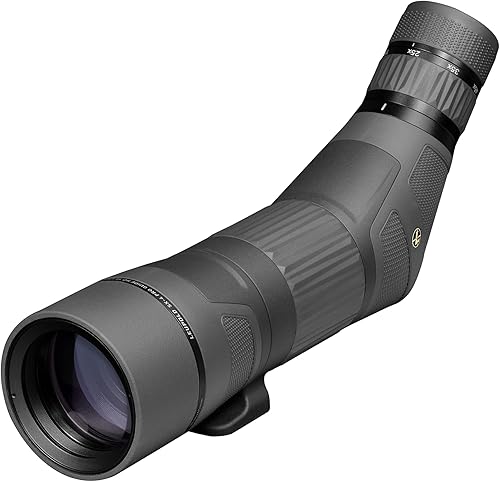
The Leupold 120374 pairs a broad 199-foot field of view with a compact 1.1 lb aluminum body, making it one of the lighter-framed variable scopes at this price point. At $488.96 it earns a 4.2 rating across 34 reviews, suggesting consistent but not universal satisfaction.
Check price on AmazonBest for
Birders and wildlife observers who want a lightweight, portable scope with a genuinely wide view at lower magnifications
Skip if
You need high-power magnification beyond 20x or plan to observe at ranges where a larger objective lens would gather more light
- Magnification 10-20X
- Objective lens 40 Mm
- Field of view 199 Feet
- Material Aluminum
- Color Shadow Gray
- Weight 1.1 lb
- Priced 15% above the category median ($425.02 across 46 tracked models)
- Weight of 1.1 lb - lighter than 79% of the 46 models we track
Our scorecard
-
Owner rating4.2/5
4.2 average across 34 owner ratings
-
Popularity2.1/5
34 owner reviews, fewer than most models here
The overall score is owner satisfaction weighted by how many reviews back it, so a high rating from few reviews counts for less. The bars below show where this model stands against the other optics: binoculars, telescopes, spotting scopes, rifle and hunting scopes, rangefinders, night vision and monoculars we track in this category on price, popularity and size. Context, not marks against it, and our read of the data, not a lab test.
Overview
['The Leupold 120374 runs a 10-20x magnification range with a 40 mm objective lens, a combination that keeps weight down to 1.1 lb while still pulling in usable detail at moderate distances. The Shadow Gray aluminum finish is a practical choice for outdoor use where glare control matters.', 'Where this scope stands out is its 199-foot field of view at 1000 yards, which is unusually wide for a variable spotting scope in this class. That breadth makes it easier to locate and track moving subjects before dialing up magnification, a real advantage for birding and nature observation.', 'The 40 mm objective is the limiting factor for low-light situations. At dawn or dusk, the smaller aperture gathers less light than 60 or 80 mm alternatives. Buyers who push into early morning or late evening sessions may find the image dims sooner than expected.']
Pros
- Extremely wide 199-foot field of view makes subject acquisition fast and easy
- Lightweight at 1.1 lb, well-suited for pack-in or travel use
- Aluminum build from a brand with a long track record in optics
- Variable 10-20x range covers both wide scanning and closer detail work
- Leupold brand reliability reflected in a 4.2 average across 34 reviews
Cons
- 40 mm objective limits light gathering compared to 60 to 80 mm alternatives
- 20x upper magnification is modest if long-range detail is the primary goal
- Smaller reviewer base of 34 means less data to average out individual variation
Specifications
| Magnification | 10-20X |
|---|---|
| Objective lens | 40 Mm |
| Field of view | 199 Feet |
| Material | Aluminum |
| Color | Shadow Gray |
| Weight | 1.1 lb |
Performance notes
Magnification runs 10-20x on a 40 mm objective lens. The 199-foot field of view at 1000 yards is the headline spec, positioning this as a wide-angle, lower-power option. The 1.1 lb body in Shadow Gray aluminum keeps carry weight minimal. No field of view data at higher magnification is listed, but the wide low-end view is the core selling point.
What buyers say
With 34 reviews averaging 4.2 out of 5, the Leupold 120374 draws a generally positive response. The review base is small enough that a handful of critical opinions could shift the average, but the current score suggests most buyers find it meets their expectations for portability and field-of-view performance.
More from Leupold



Similar optics: binoculars, telescopes, spotting scopes, rifle and hunting scopes, rangefinders, night vision and monoculars to consider
Frequently asked questions
Is a 40 mm objective lens enough for daytime wildlife observation?
For bright daylight use, 40 mm is adequate at 10-20x. The exit pupil remains workable in good conditions. Where it shows limits is during low-light hours at dawn or dusk, when a 60 or 80 mm objective would deliver a noticeably brighter image.
How does the 10-20x range compare to most spotting scopes on the market?
Most spotting scopes offer 20-60x zoom, so the 120374 sits at the low end of the magnification spectrum. That tradeoff buys you a wider field of view and a lighter body, which suits observers who scan broad areas rather than study stationary targets at extreme range.
Does the aluminum body hold up in field conditions?
Aluminum construction is standard on mid-range and premium spotting scopes and handles normal outdoor handling well. It resists denting better than plastic, though it adds a bit more weight than composite shells. At 1.1 lb total, the 120374 keeps that penalty very low.